Dipl.-Ing. Rüdiger FleckArchitecture & urban design
Living systems &systems to live in
The practice
Rüdiger Fleck plans and builds around closed cycles — from settlement-scale ecological systems to careful work in the existing fabric. Surveying, documentation, renovation and regenerative design, held to one standard: the whole, not the part.
Approach
The whole, in practice
Every project here is planned as a system — and a good system is four things at once. Take away any one and the loop won’t close.
Living
A house is not finished at handover; that is when it starts living. Whatever technology a settlement carries, the everyday of the people in it — heating, mending, deciding together — has to carry it. So I plan from the inhabitant outward.
Circular
Water, heat, nutrients and material usually pass through a settlement once — a supply problem on one side, a disposal problem on the other. A loop resolves both, and it closes only above the single house: it needs neighbours, shared plant, an owner. I design the loop first, then the buildings within it.
Regenerative
Reducing harm only slows depletion; nothing recovers by being damaged more slowly. A system is regenerative when its outputs become inputs again — when what leaves the settlement feeds soil, plants or the grid. The design task is the return path.
Rooted
A standing building holds material, energy and work paid for decades ago; tearing it down throws a closed loop away. Renovation is circuit thinking applied across time — building onward with what earlier generations built, beginning with a careful measure of what is actually there.
Case studies
Ecological settlements at two different scales
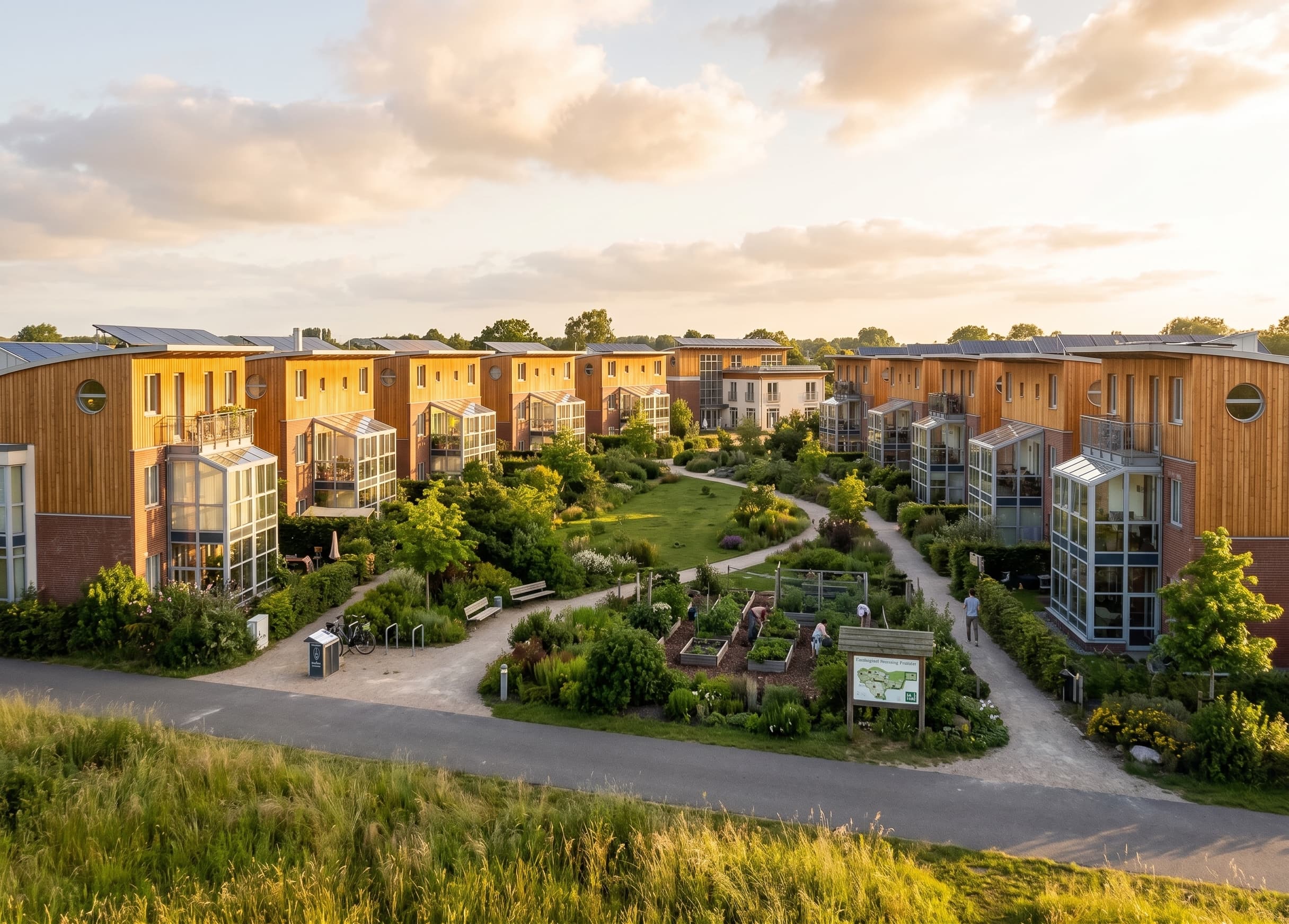
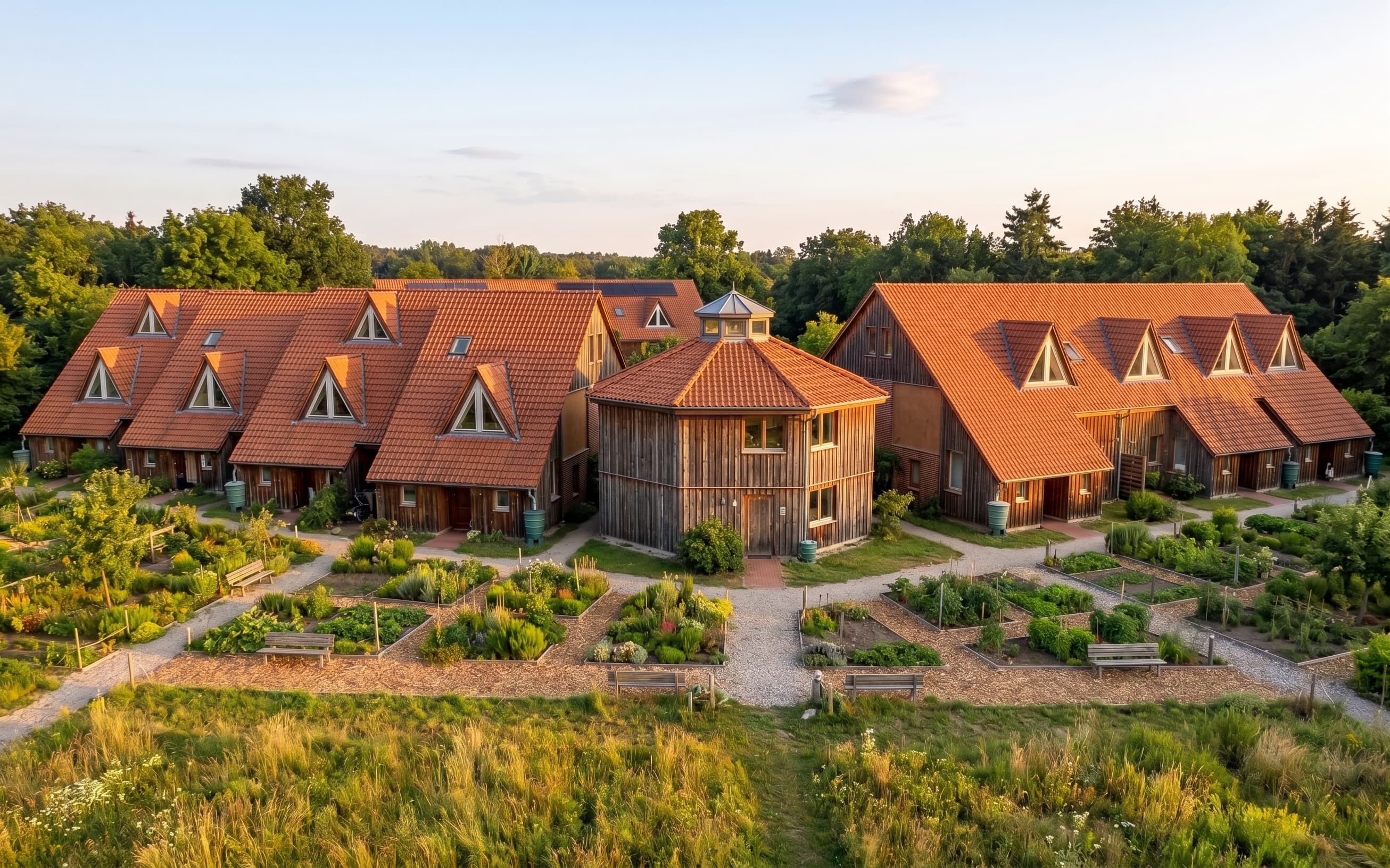
For twenty-five years, settlements Rüdiger Fleck designed have made their own energy, treated their own water, and returned their own nutrients to the land — owned and run by the people who live in them.
Services
From single buildings to whole settlements.
Surveying & documentation
You can only keep what you truly know. An accurate measured survey is the basis of every good intervention in an existing building — and the data becomes a CAD or BIM model that engineers, energy consultants and contractors can work in directly.
Building in the existing fabric
Renovation, conversion and careful additions, including occupied and listed buildings. A building that stands is material, work and history already paid for — keeping it in use is usually the most economical move, and always the most resource-saving one.
Ecological & regenerative design
Closed energy, water and material cycles at the scale of a building group or a neighbourhood — the field the settlements were built in. Timber and clay where they serve the construction, decentralised plant where it serves the residents, every choice weighed by what it costs the whole system.
Urban design & advisory
Neighbourhood structure, ownership models for shared infrastructure, and the question of scale: at which level should energy, water and heat actually be organised? Behind the advice stand settlements that were built, measured, and are still running.
Work index
Selected projects, 1990–2017
Ecological settlements, urban design, and building in the existing fabric.